PST Converter Tool
4.7
The Cigati PST Converter Tool is designed to convert Outlook PST files into multiple file formats and email platforms while preserving the integrity of mailbox data. It maintains the original folder hierarchy, email formatting, attachments, and metadata throughout the conversion process. Built for both individual users and IT professionals, the software delivers accurate, secure, and reliable PST conversion for mailboxes of all sizes.
Launch the Software
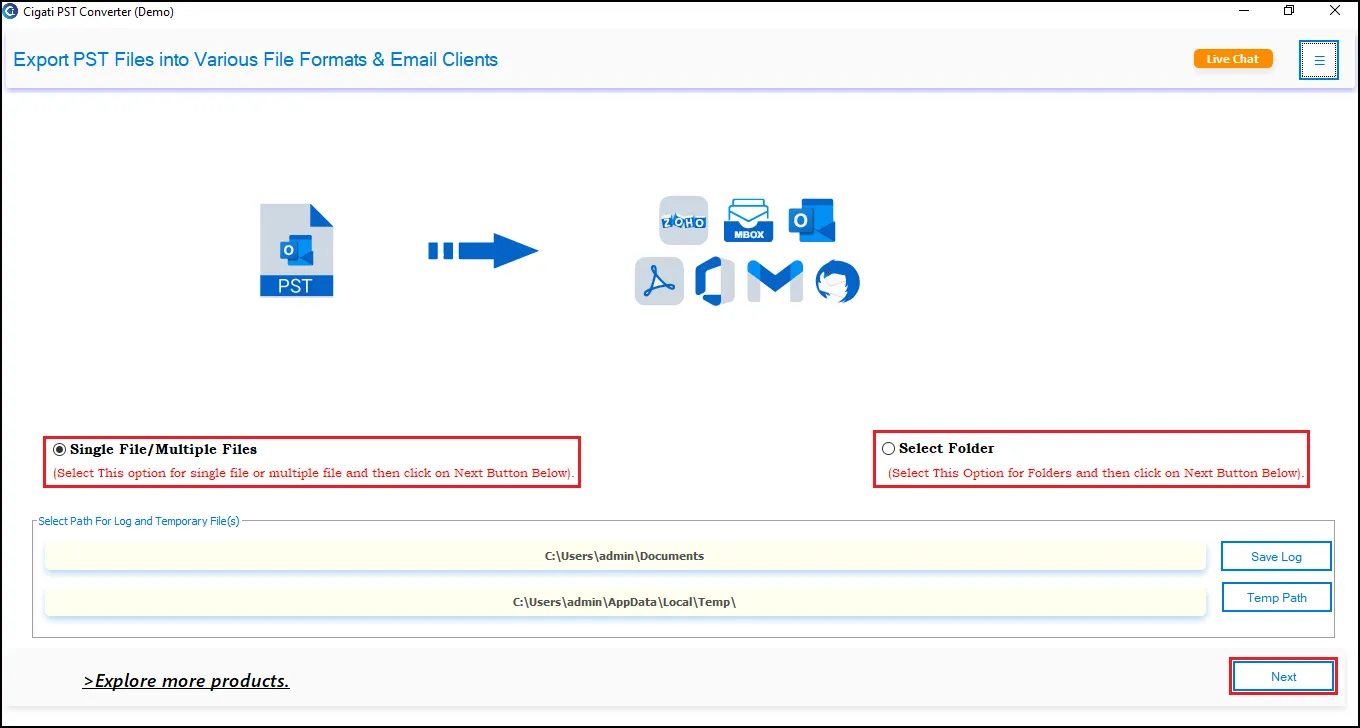
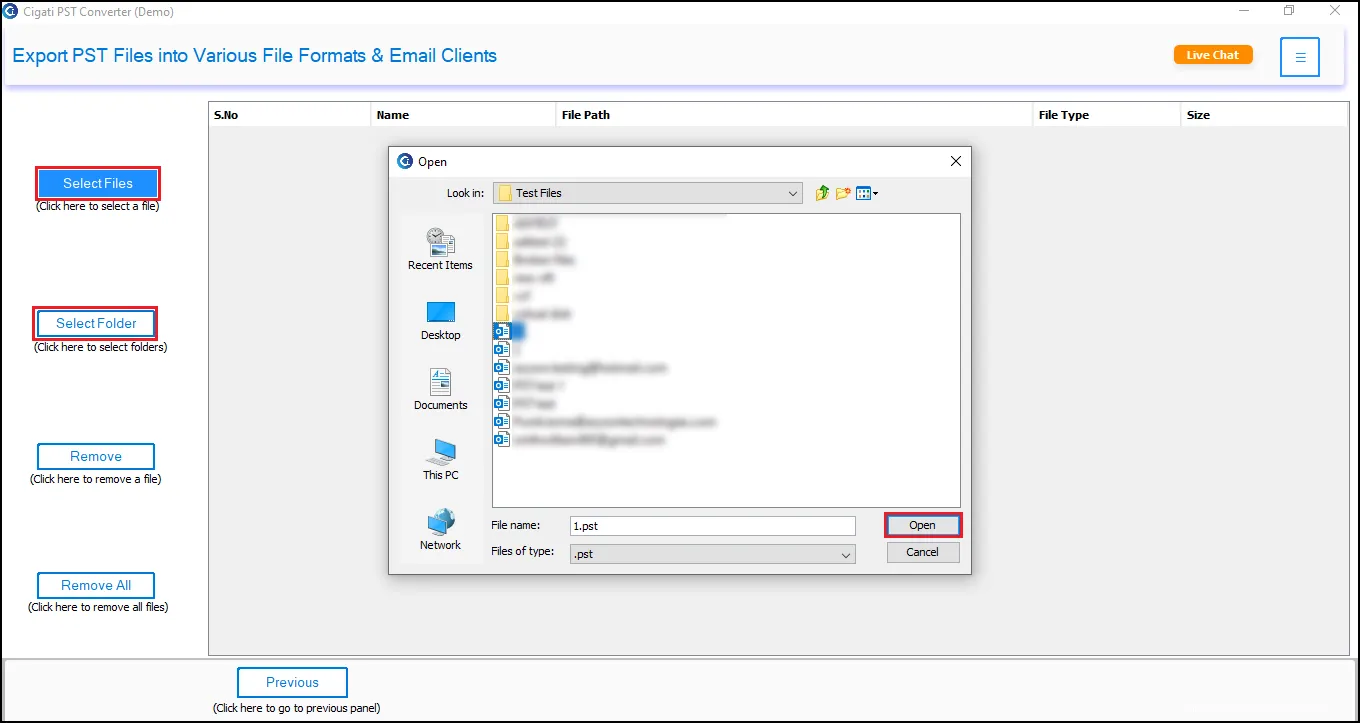
Open the Cigati PST Converter Tool and click Select File(s) or Select Folder to add your PST/OST files.

Browse PST/OST Files
Browse your system and select one or multiple PST/OST files that you want to convert or migrate.
Verify File Status
The software automatically identifies blank, corrupted, or locked files and displays them before proceeding.
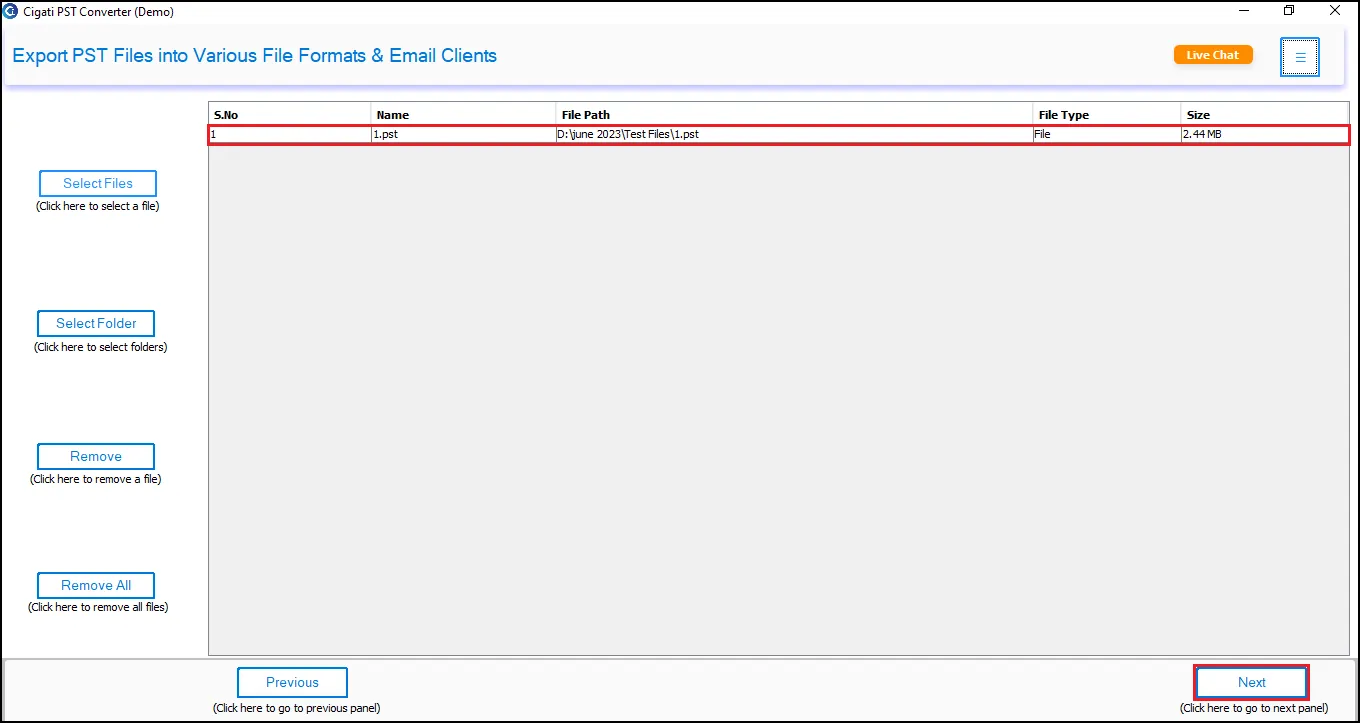
Review Imported Files
Review the list of successfully added PST/OST files along with their file paths and sizes, then click Proceed.
Preview Mailbox Data
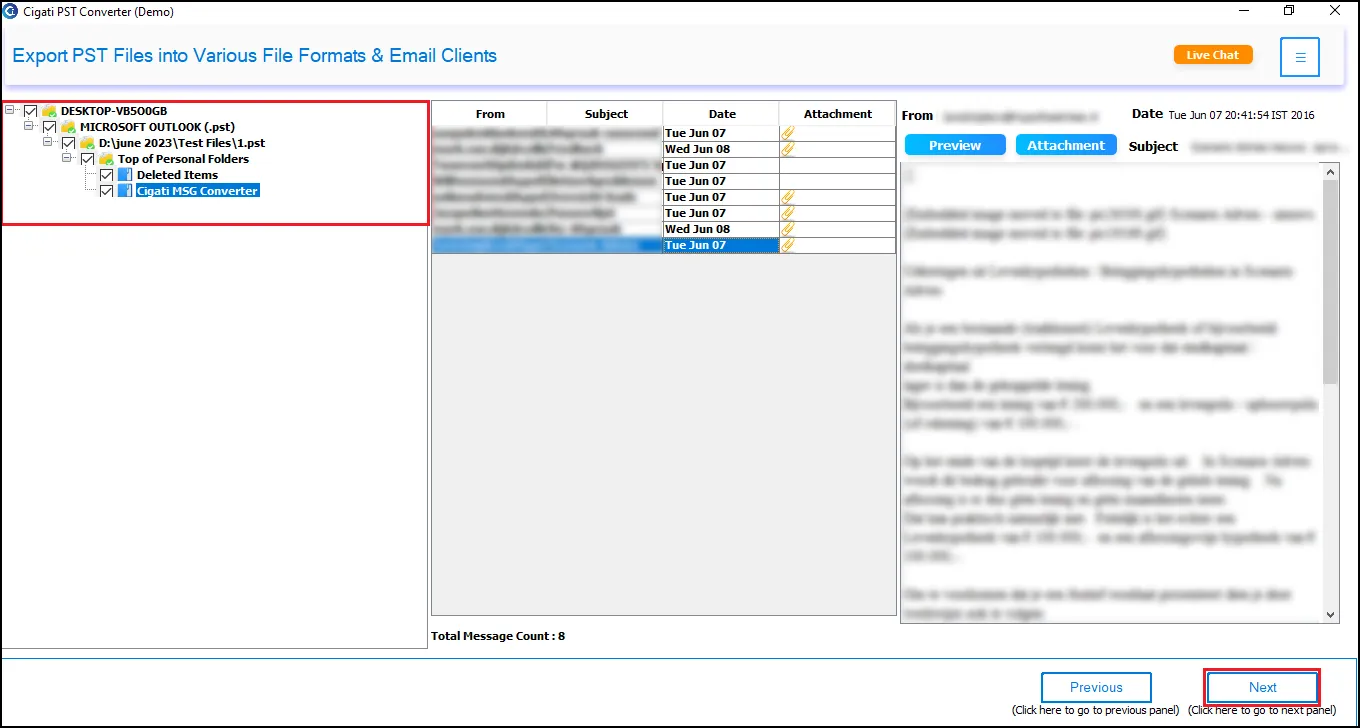
Expand the mailbox tree to preview emails, contacts, calendars, tasks, and other Outlook items before conversion.
Preview Individual Items
Double-click any item to view its HTML Body, attachments, headers, calendar, contacts, notes, tasks, plain text, MIME, or raw HTML.
Choose Destination
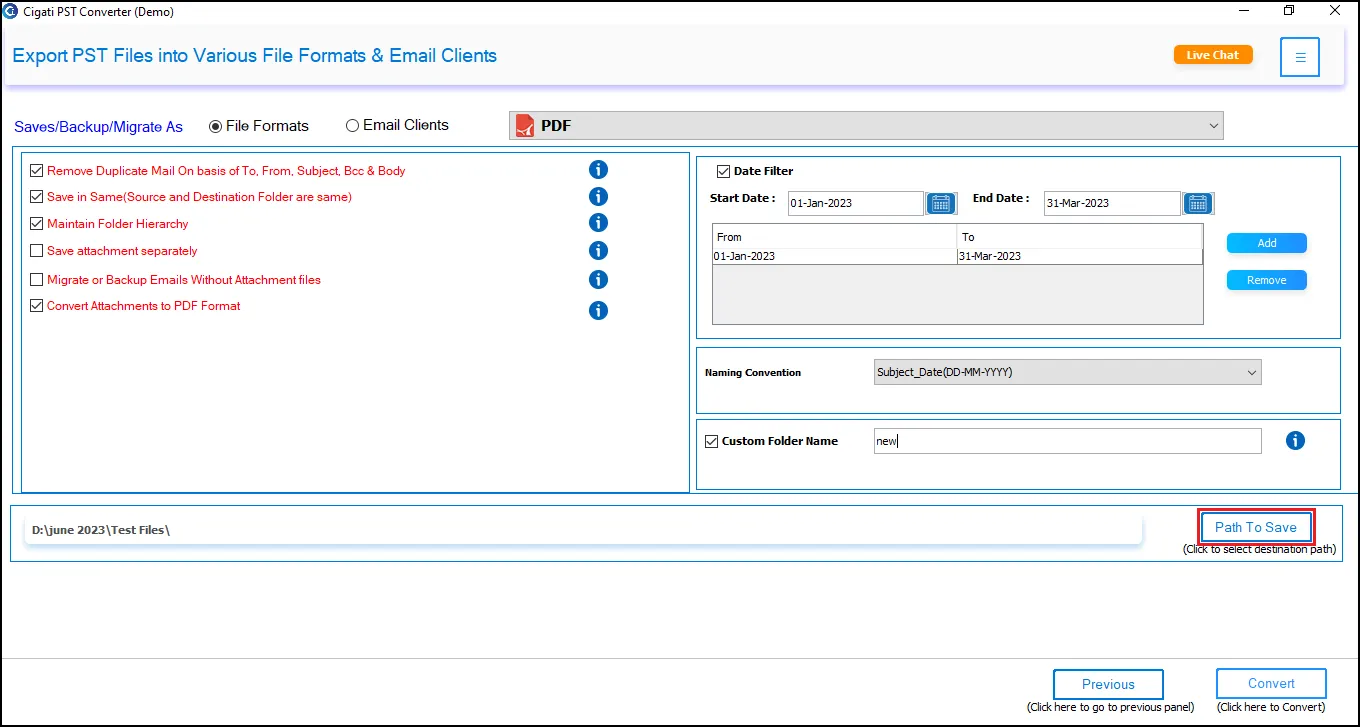
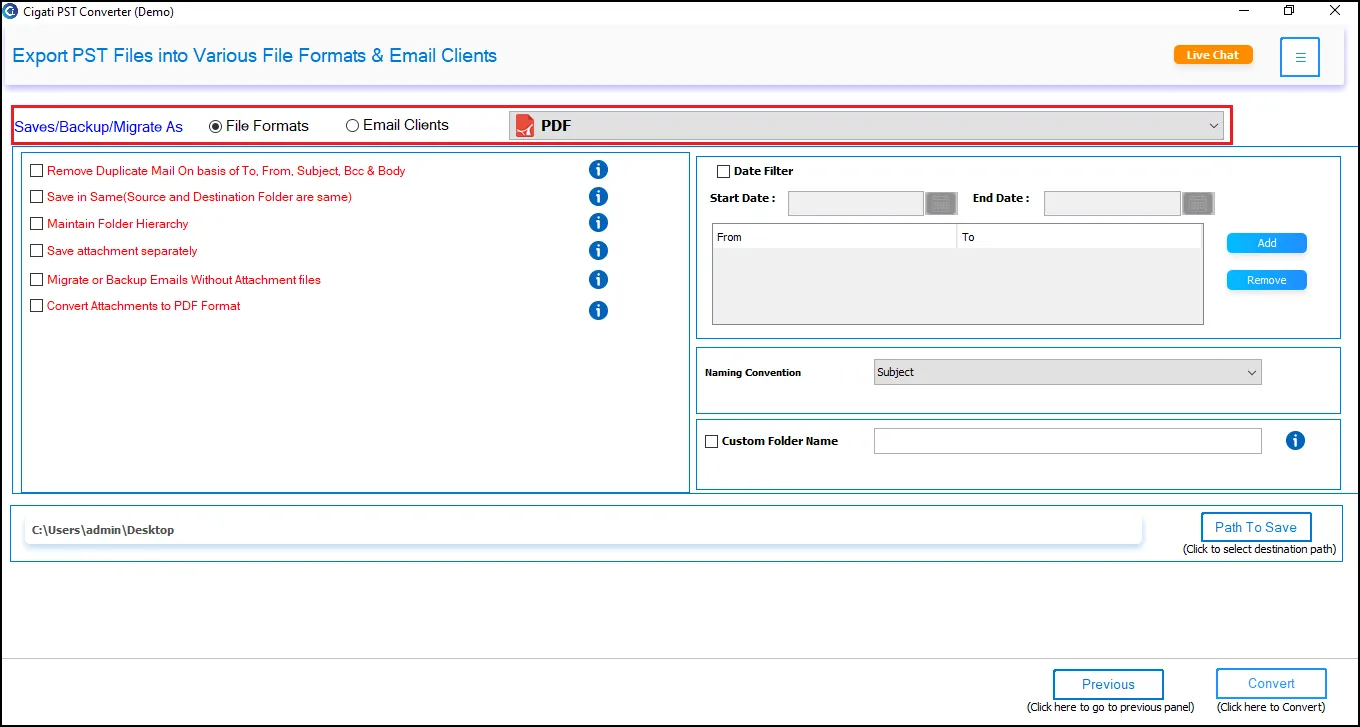
Select whether to export the PST data to a file format or migrate it directly to a file format such as PST, PDF, MBOX, EML, MSG, DOCX, PNG, ICS, VCF, CSV, MD, JSON, or Mozilla Thunderbird.
Configure General Settings
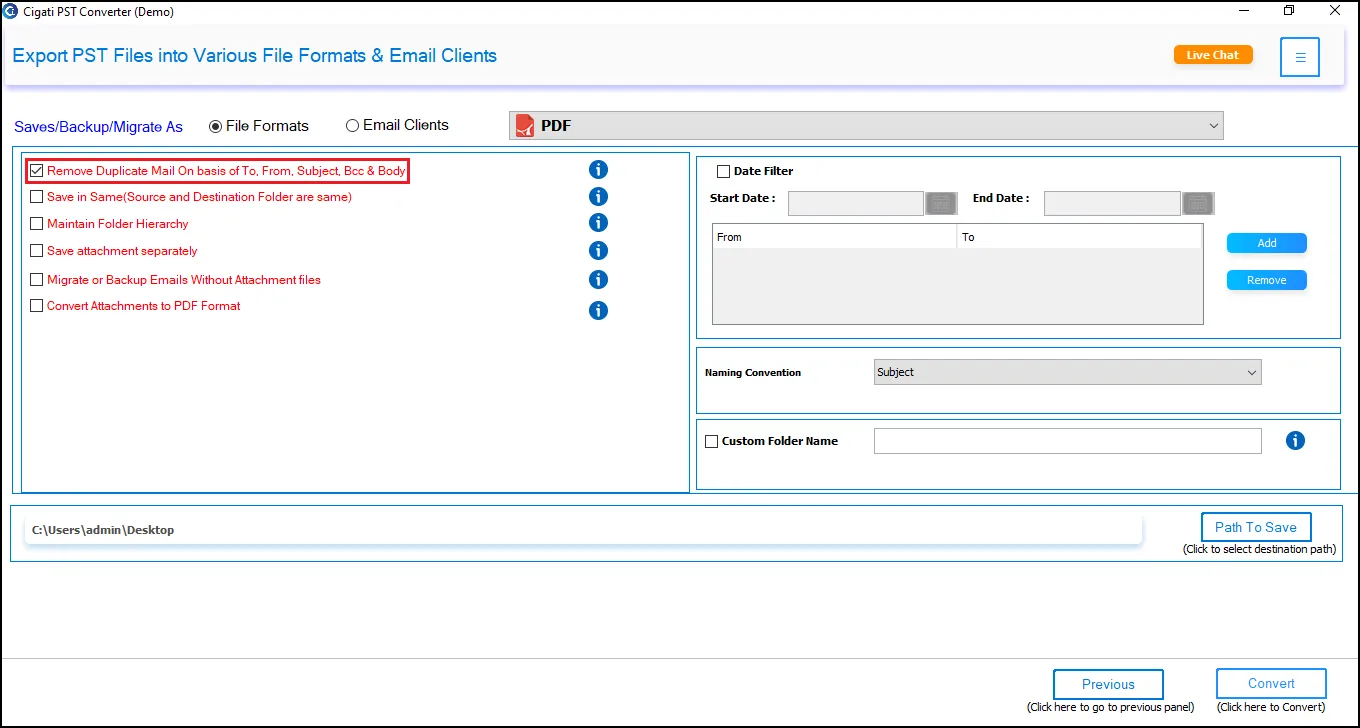
Use the available general settings to customize the export process.
Configure Advanced Controls
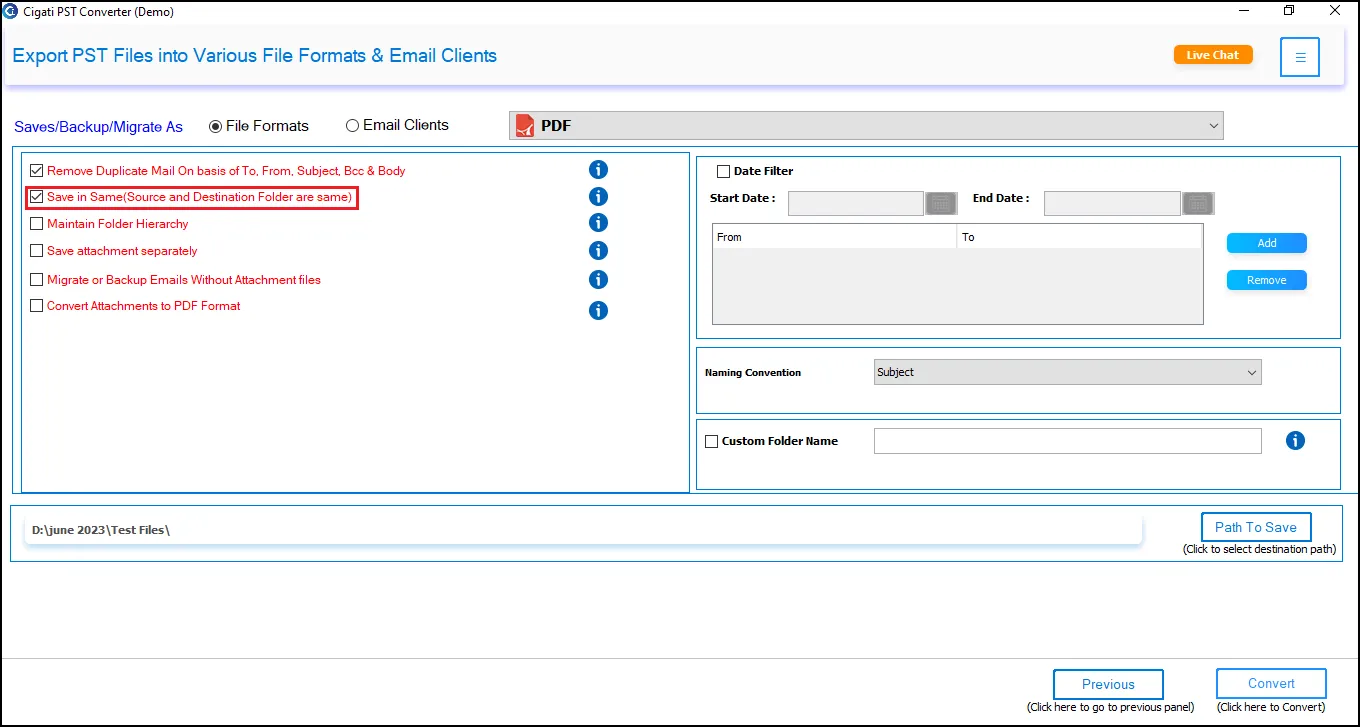
Use advanced options to optimize the conversion according to your requirements.

Select Destination & Configure Export Settings
Click on Browse to set the required export preferences and click Start Export to begin the conversion or migration process.
Choose Destination
Select whether to export the PST data to a file format or migrate it directly to an email client such as Microsoft 365, Google Workspace, IMAP, GoDaddy, or Outlook.com.
Authenticate the Destination Account
Sign in securely using OAuth or supported authentication to authorize the selected destination account.
Complete Authentication
After successful authentication, return to the application to configure the export or migration settings.
Configure General Settings
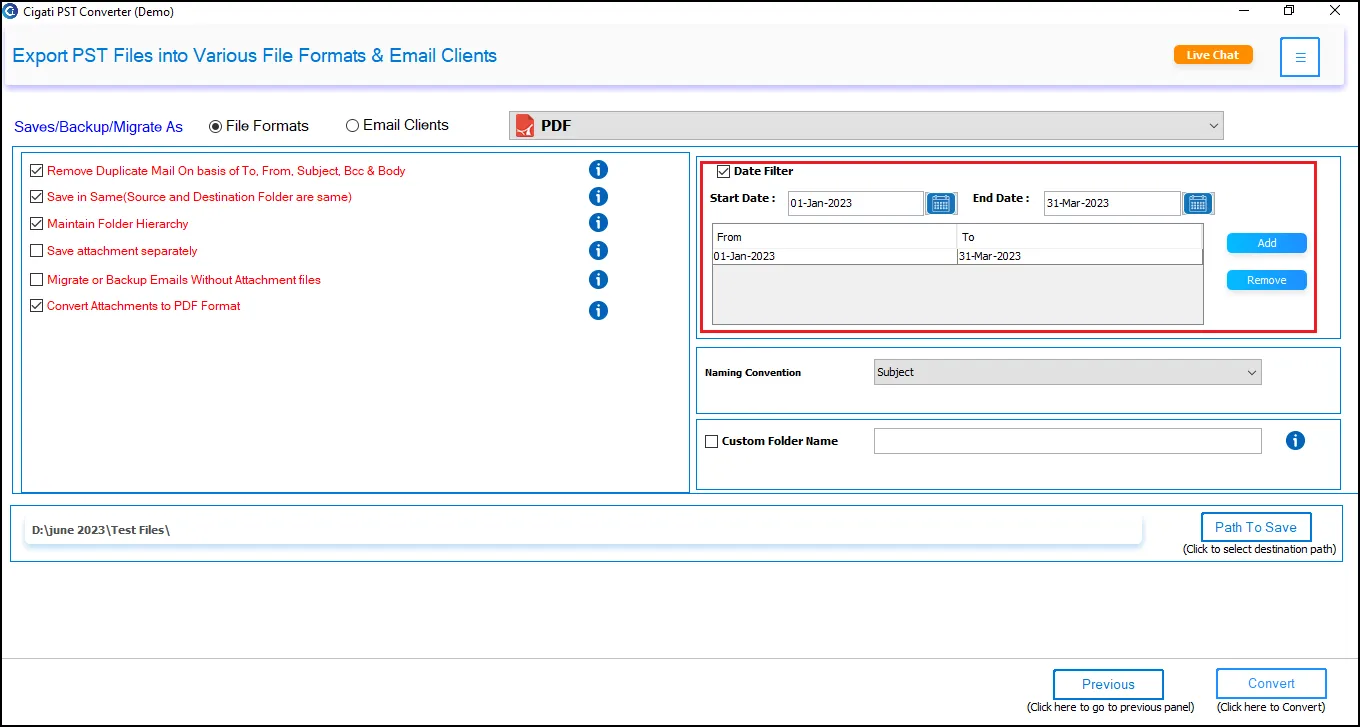
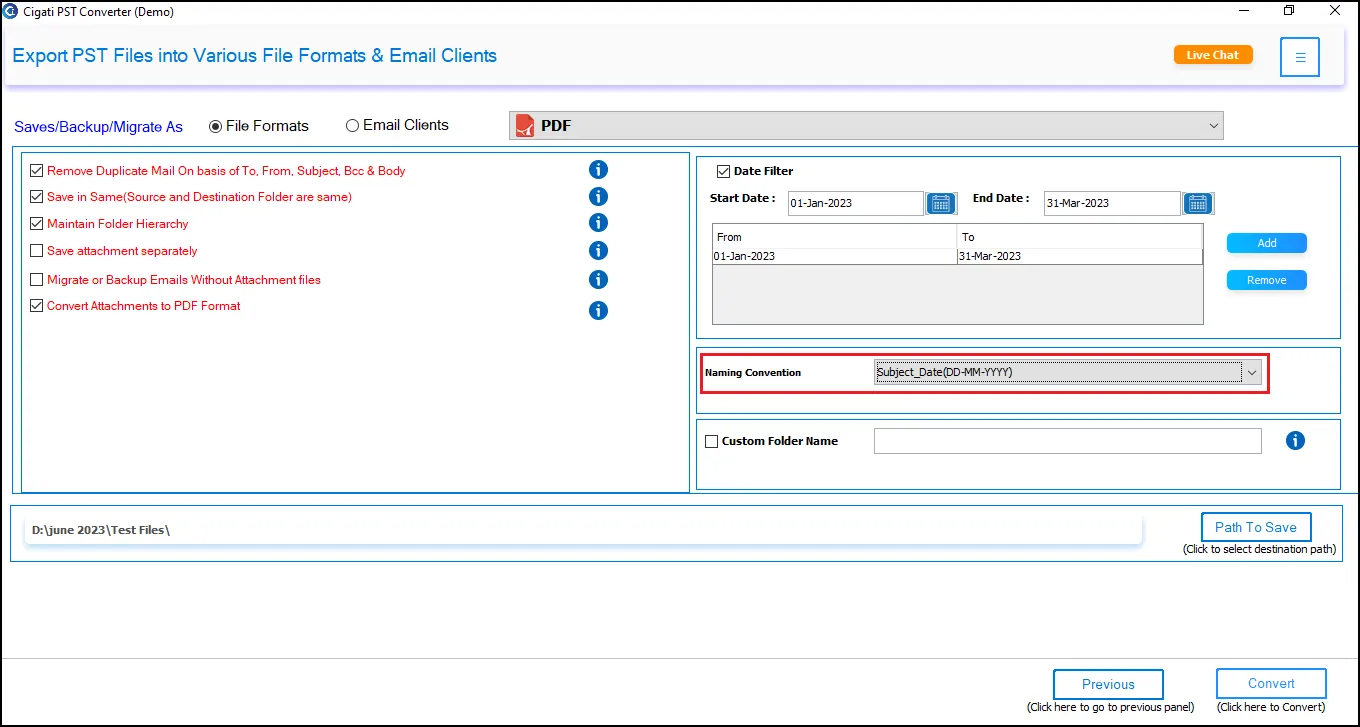
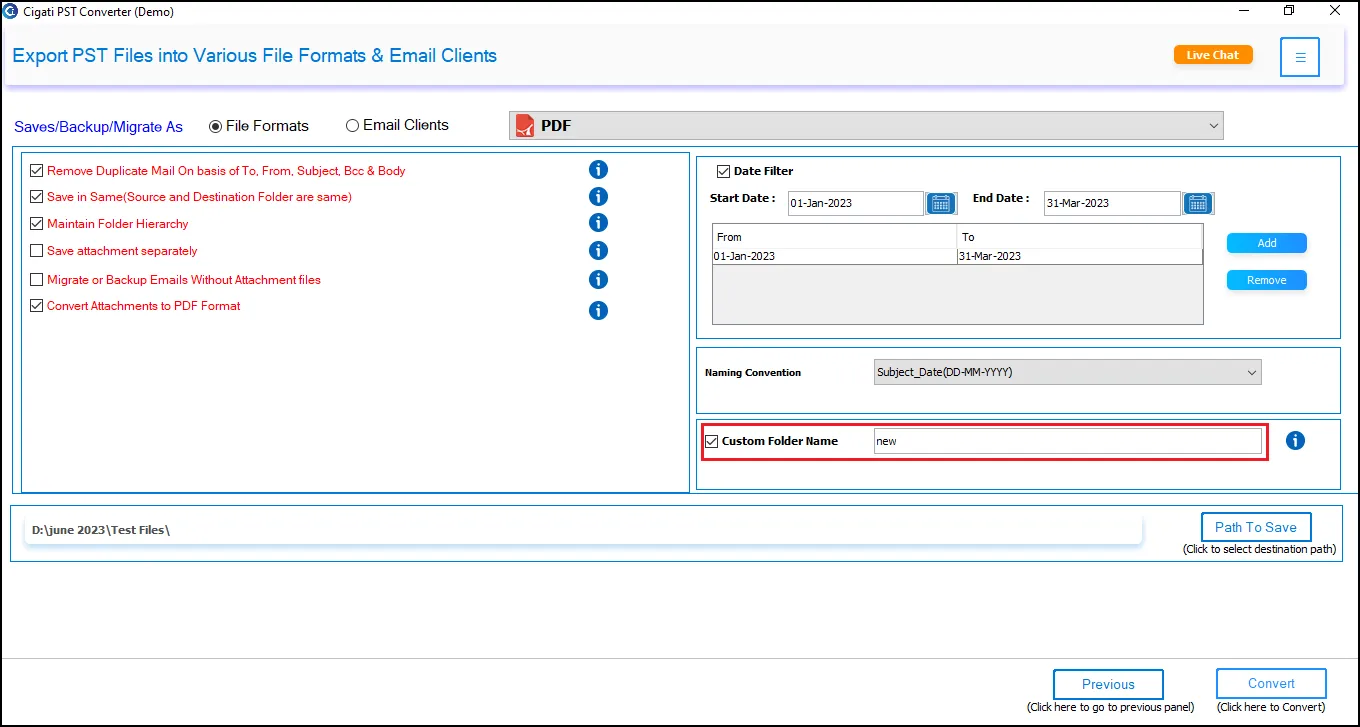
The General Settings section allows you to customize the export according to your requirements. You can export emails within a specific date range, apply a preferred file naming convention, and choose a custom destination folder for the output. It also lets you skip previously exported items to avoid duplicates while preserving the original folder hierarchy or mapping folders to the default mailbox structure of the selected email service.
Configure Advanced Controls
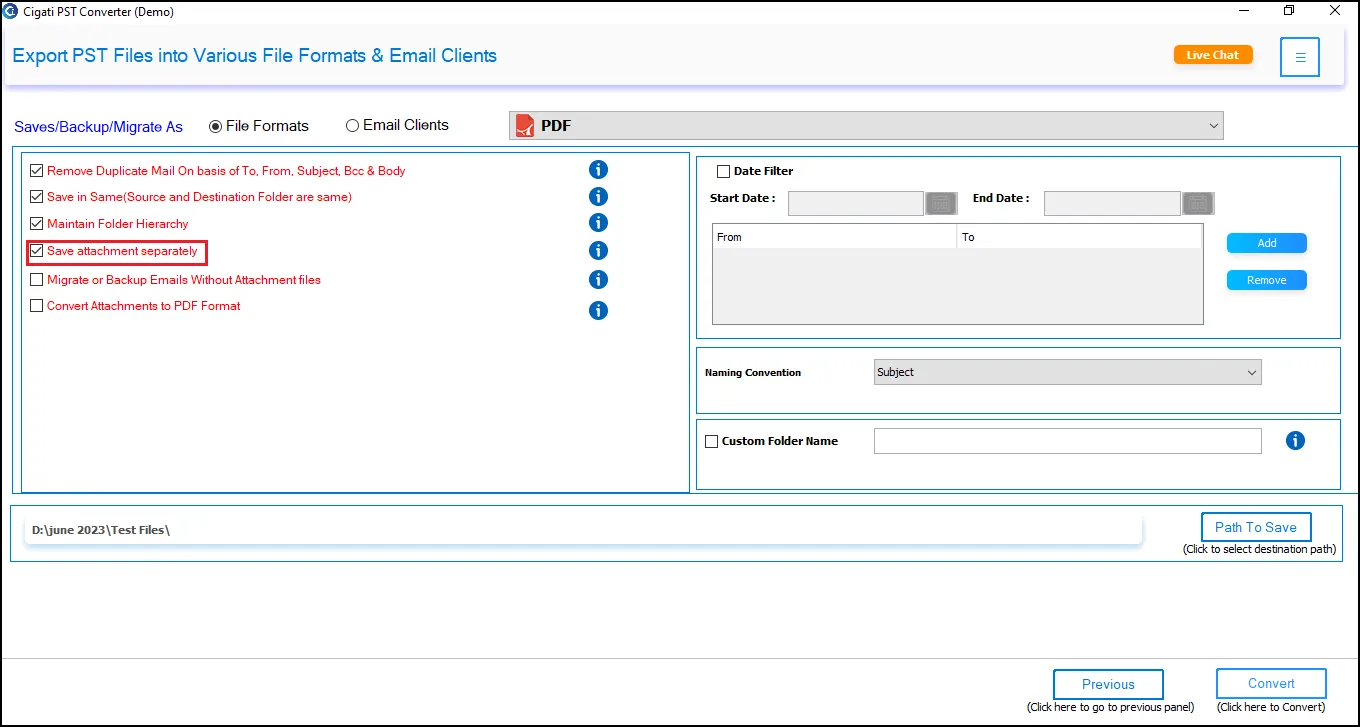
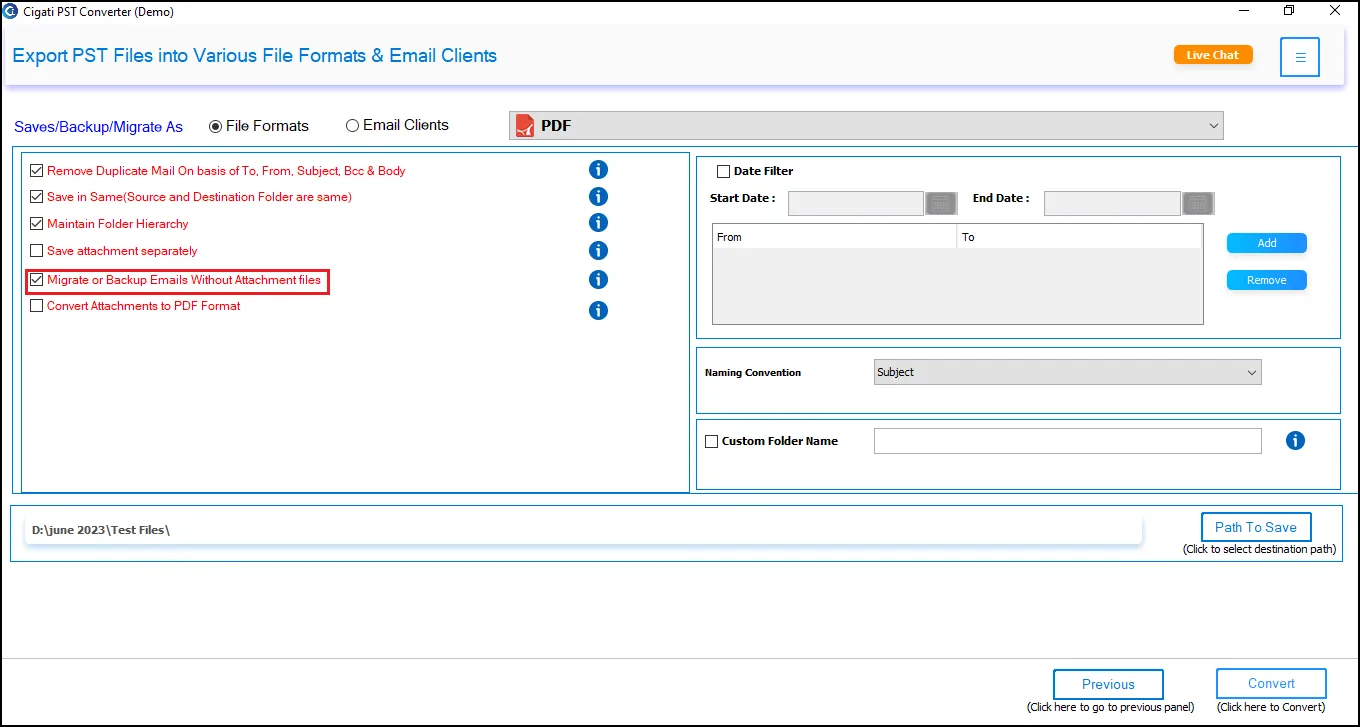
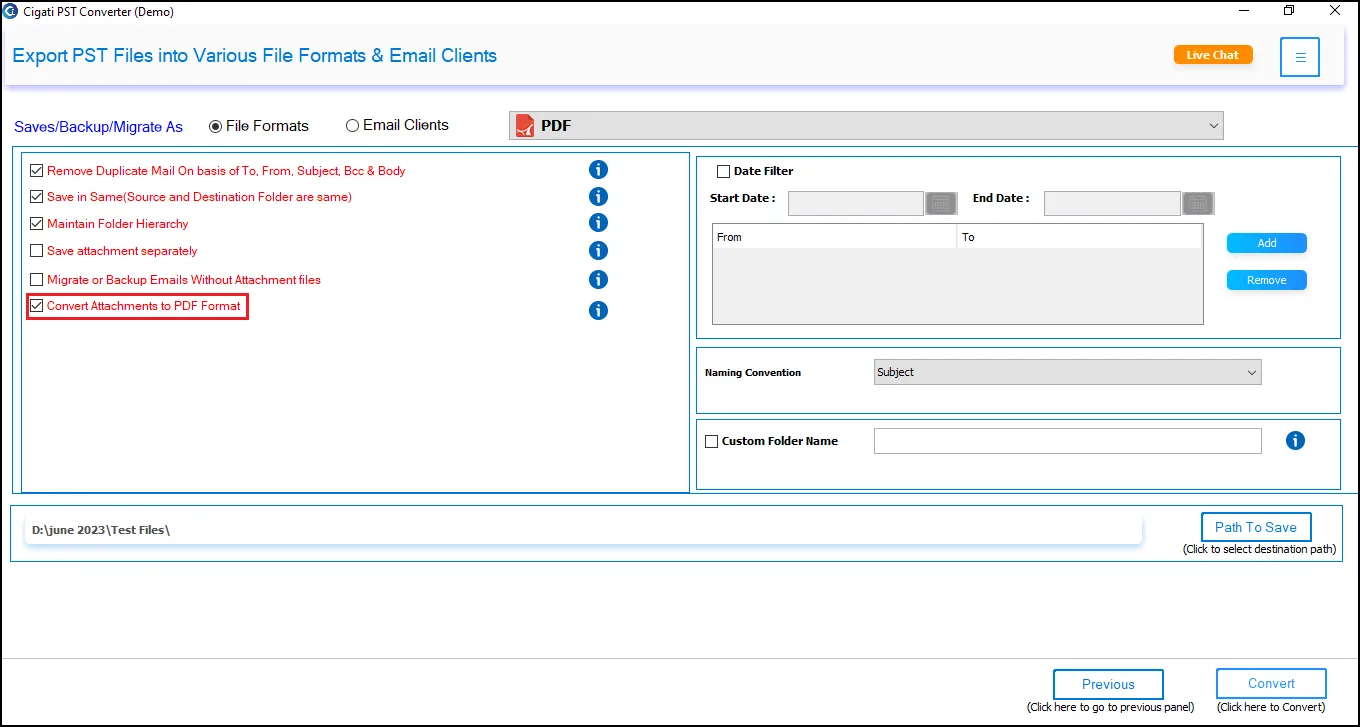
The Advanced Controls section lets you customize how your data is exported. You can choose how attachments are handled by exporting them separately, merging them, or excluding them. It also helps prevent duplicate emails by comparing selected fields such as To, From, Subject, Body, and CC before exporting.
Configure Export Settings
Set the required export preferences and click Start Export to begin the conversion or migration process.